
Table of Contents
- Understanding House Renovation Cost Basics
- Home Renovation Cost Per Square Foot
- Kitchen Renovation Cost Breakdown
- Bathroom Renovation Costs and Typical Ranges
- Remodel Versus Rebuild Cost Comparison
- Planning Your Renovation Budget and Contingency
- Whole-House Renovation Cost Estimates and Project Planning
- Frequently Asked Questions
Last Updated: October 12, 2026
Understanding House Renovation Cost Basics
How much does it cost to renovate a house in Boston? It depends on three factors: scope of work, material quality, and local labor costs. A small bathroom refresh might run several thousand dollars, while a whole-house renovation can exceed six figures. At Boston Builders Contracting, we help homeowners plan realistic budgets.
The biggest mistake homeowners make is underestimating complexity. You find one price online, assume it applies to your project, and get blindsided when quotes come in 40-60% higher.
What Drives Renovation Expenses
Three elements control your final bill:
- Scope of work. Are you refreshing surfaces or gutting to the studs?
- Material quality. Budget fixtures versus high-end finishes create vastly different price tags.
- Your home’s age and condition. Older homes often hide surprises behind walls.
When planning a house renovation cost estimate, define exactly what “renovation” means for your project. The difference between a cosmetic refresh and a structural overhaul is enormous.
Scope of Work: Cosmetic vs. Structural
A cosmetic renovation touches surfaces: paint, flooring, fixtures, hardware. You keep walls, plumbing, and electrical in place. This costs less and finishes faster.
A structural renovation goes deeper: moving walls, upgrading electrical, replacing plumbing, or fixing foundations. It requires permits, inspections, and specialized contractors, and costs significantly more.
Most homeowners underestimate how much of their project is structural. A simple kitchen update often reveals outdated wiring, old plumbing, or code violations once work begins, which is why contingency funds matter.
Home Renovation Cost Per Square Foot
Cost per square foot is a rough guide only. The number swings wildly depending on scope, housing type, and how much of the home you touch. A 2,000-square-foot whole-house renovation might average $100-$300 per square foot depending on scope and finishes, because the metric ignores what happens in each space.
Kitchen and bathroom work costs far more per square foot than living areas. A kitchen renovation might run $150-$400 per square foot. A bathroom might hit $100-$300 per square foot.
Scope-Based Per-Square-Foot Ranges
The most useful way to read a per-square-foot number is to match it to a defined scope. The ranges below assume a typical 1,800-2,200 square foot home and mid-grade finishes. Treat them as planning bands, not quotes.
| Scope | What It Includes | Per Sq Ft Range |
|---|---|---|
| Cosmetic refresh | Paint, flooring, fixtures, hardware; no layout or system changes | $25-$60 |
| Partial renovation | One or two rooms plus targeted system updates | $75-$150 |
| Full renovation | Kitchen, baths, systems, finishes throughout; some structural work | $150-$300 |
| Gut renovation | Down to the studs; new electrical, plumbing, HVAC, layout changes | $250-$450+ |
These bands overlap on purpose: a gut renovation of a small condo can land near the low end, while a partial renovation of a large single-family home with structural surprises can push past the top.
How Housing Type Changes the Number
Housing type matters as much as scope. Condo renovations carry different cost drivers than single-family homes due to building rules, shared systems, and access constraints.
- Condos. Work is often limited to weekday hours, elevators must be protected, and building management may require licensed trades and proof of insurance. Common-area damage deposits and elevator reservations add cost. On the plus side, exterior work is not your responsibility.
- Single-family homes. You control access and scheduling, but you also own every system. Roof, siding, foundation, and exterior work all land on your budget.
- Older housing stock. Homes built before 1978 carry lead-paint considerations, and pre-1950 homes often have knob-and-tube wiring, galvanized plumbing, or undersized electrical service. Any of these can add five figures to a project once walls open.
Reading a Per-Square-Foot Quote
When comparing house renovation cost estimates, ask contractors to break down cost per square foot BY ROOM. This reveals whether they are quoting a realistic scope or missing major work, since a kitchen can cost three to four times more per square foot than a bedroom.
Ask each contractor for a room-by-room square-foot breakdown plus a separate line for permits, design, and contingency. If two bids differ by more than 20% on the same scope, the gap is usually in what one of them left out, not in labor rates.
A per-square-foot figure is a sanity check, not a budget. Use it to spot outliers, then build the real number from an itemized scope.
Kitchen Renovation Cost Breakdown
A kitchen renovation is one of the most expensive projects a homeowner undertakes. Kitchen remodel costs typically include cabinetry, countertops, appliances, flooring, lighting, and labor.
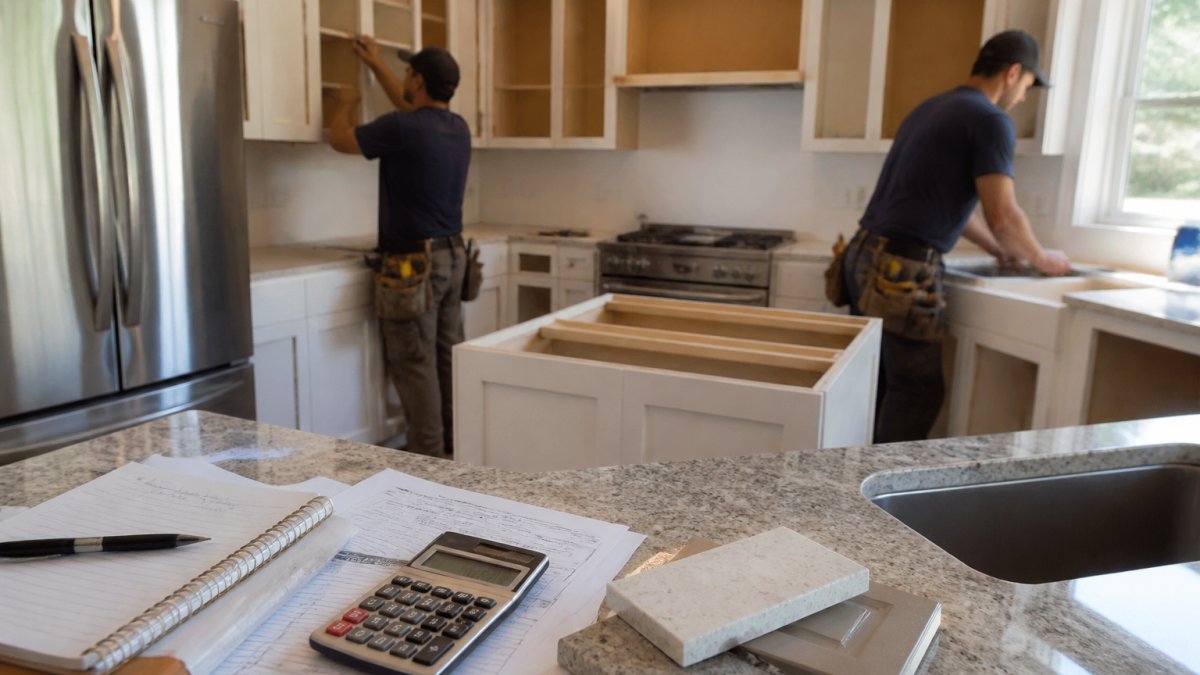
A basic kitchen refresh, new paint, new hardware, updated lighting, might run $10,000-$20,000. You’re keeping cabinets and countertops but making the space feel current.
A mid-range kitchen remodel replaces cabinetry and countertops, updates appliances, and refreshes flooring. Expect $30,000-$60,000, the most common kitchen renovation homeowners choose.
A high-end kitchen renovation includes custom cabinetry, premium countertops, top-tier appliances, and possibly structural changes like moving walls or adding an island.
The kitchen renovation cost breakdown typically looks like this:
- Cabinetry: 25-35% of total kitchen budget
- Countertops: 10-20%
- Appliances: 15-25%
- Flooring: 10-15%
- Labor and installation: 20-30%
- Permits and miscellaneous: 5-10%
Labor and Contractor Fees
Labor is the largest line item in most renovations. Contractors charge hourly rates or fixed project fees; fixed fees are preferable because they lock in your cost.
When you get quotes from multiple contractors, differences often reflect experience and overhead, not just labor rates. A pricier contractor might finish faster or produce higher-quality work, so don’t automatically choose the lowest bid.
Boston Builders Contracting provides detailed estimates that break down labor separately so you understand what you’re paying for. We also manage timelines so you’re not surprised by delays that trigger additional costs.
Materials and Finish Selections
Material choices create the biggest cost swings. Budget tile might cost $3 per square foot; high-end tile runs $15-$30. Multiply that across hundreds of square feet and you see how finishes drive the budget.
The same applies to cabinetry, countertops, flooring, and fixtures. Match your selections to your overall budget rather than upgrading one area and cutting corners elsewhere.
Many homeowners make selections without understanding the cost impact. Establish a material budget with your contractor BEFORE picking finishes to prevent sticker shock and keep the project on track.
Bathroom Renovation Costs and Typical Ranges
A bathroom renovation is smaller than a kitchen, but costs per square foot are often higher due to plumbing and tile work.
A basic bathroom refresh, new fixtures, paint, lighting, runs $5,000-$10,000. You’re not moving plumbing or changing the layout.
A mid-range bathroom renovation includes new vanity, toilet, shower/tub, flooring, and tile work. Budget $15,000-$35,000 for this scope. This is the most popular bathroom project.
A luxury bathroom renovation includes custom tile, heated floors, spa-quality fixtures, and possibly a larger footprint. These projects run $40,000-$80,000 or more.
Bathroom renovations require licensed plumbers and tile specialists, adding to labor costs but ensuring code compliance and quality. They also disrupt daily life more than other projects because you lose access to the space during construction.
Remodel Versus Rebuild Cost Comparison
Understanding the difference between a remodel and a rebuild helps you scope your project correctly. A remodel updates existing systems. A rebuild replaces them entirely.
A bathroom remodel keeps the existing plumbing rough-in and reconfigures the space around it.
A kitchen remodel might keep the existing layout and electrical rough-in.
| Project Type | Scope | Cost Range | Timeline |
|---|---|---|---|
| Cosmetic Refresh | Paint, fixtures, hardware | $5K-$20K | 2-4 weeks |
| Standard Remodel | Replace surfaces, keep structure | $20K-$60K | 4-8 weeks |
| Major Remodel | New systems, some structural work | $60K-$120K | 8-16 weeks |
| Full Rebuild | Replace everything, relocate systems | $120K-$250K+ | 16+ weeks |
Rebuilds cost more because they require specialized work and cause more disruption, but they give you complete control over the final design and often better long-term value.
Planning Your Renovation Budget and Contingency
A realistic renovation budget includes three components: the quoted work, a contingency fund, and a buffer for financing costs if applicable.
The quoted work is what your contractor estimates for the planned scope. This should be itemized so you understand what’s included.
A contingency fund covers unexpected issues discovered during construction. Most contractors recommend 10-20% contingency. For a $50,000 project, that’s $5,000-$10,000 set aside for surprises.
Why do surprises happen? Older homes hide problems. Once walls open up, you might discover outdated wiring, rotted framing, plumbing issues, or pest damage.
Setting Aside Funds for Unexpected Issues
The most common unexpected issues in renovations are:
- Structural damage (rotted wood, foundation issues)
- Outdated electrical or plumbing requiring upgrades
- Asbestos or lead paint requiring remediation
- Mold or water damage
- Code violations that must be corrected
Set your contingency fund aside BEFORE work starts. Don’t plan to fund surprises as they arise. This prevents the frustrating situation where you’re mid-project and suddenly $10,000 short.
Boston Builders Contracting includes a detailed walk-through before starting work to identify likely issues. We also communicate clearly if we discover problems, so you’re never blindsided by costs.
Permits, Building Code Compliance, and Historic District Rules
Permits are required for most renovation work. They cost money and add time, but they protect you.
Unpermitted work creates problems when you sell. Buyers discover it during inspections, and lenders won’t finance homes with unpermitted renovations.
Building code requirements vary by project type. Electrical work requires a licensed electrician and inspection. Plumbing work requires a licensed plumber and inspection. Structural work requires engineer sign-off.
If your home is in a historic district, additional rules apply. Changes to exterior appearance require approval. Some interior work also needs clearance.
Whole-House Renovation Cost Estimates and Project Planning
A whole-house renovation touches every room. Costs depend on how much you’re actually changing.
A cosmetic whole-house renovation, new paint, flooring, fixtures, lighting, might run $40,000-$80,000 for a 2,000-square-foot home. You’re refreshing surfaces everywhere.
A mid-range whole-house renovation includes kitchen and bathroom updates plus cosmetic work elsewhere.
A high-end whole-house renovation includes premium finishes, structural changes, system upgrades, and possibly additions. These projects run $200,000-$400,000+ depending on scope.
The house renovation cost estimate for a whole-house project should break down by room so you understand where money is going.
Timeline, Sequencing, and Temporary Housing
A whole-house renovation requires careful sequencing. You can’t do everything at once. Most projects follow this order:
- Structural and system work (framing, electrical, plumbing, HVAC)
- Drywall and insulation
- Flooring and tile
- Cabinetry and fixtures
- Painting and trim
- Final inspections and cleanup
This sequencing takes 4-6 months for a whole-house project, depending on complexity and contractor availability.
During a whole-house renovation, you’ll lose access to most of your home. Many homeowners relocate temporarily.
Some homeowners phase renovations to avoid this. You might do the kitchen first, then the bathrooms, then other areas.
A house renovation cost in Boston depends on what you’re actually doing, not just square footage. Start by defining your scope clearly.
At Boston Builders Contracting, we specialize in helping homeowners navigate renovation projects with minimal disruption to daily life.
Frequently Asked Questions
How much does it cost to renovate a 1,500-square-foot home?
A 1,500-square-foot home renovation cost depends heavily on scope and finishes. A cosmetic refresh (paint, flooring, fixtures) typically runs lower than a gut renovation involving structural, electrical, and plumbing work. Most homeowners budget between $150,000 and $300,000 for mid-range whole-house work. The cost per square foot varies by project scope, so getting a detailed estimate from a licensed contractor is essential for accuracy.
What is the 30% rule in remodeling?
The 30% rule suggests you should not spend more than 30% of your home’s current value on a renovation. This guideline helps protect your investment and resale value. For example, if your home is worth $400,000, the rule suggests limiting renovation spending to $120,000. However, this is a general guideline, kitchen and bathroom renovations often justify higher percentages due to their impact on daily living and resale appeal.
How much should I set aside for unexpected renovation costs?
Most contractors recommend a contingency fund of 10-20% of your total renovation budget. For a $100,000 project, that means $10,000 to $20,000 set aside. Older homes and gut renovations warrant the higher end because hidden issues like outdated wiring, plumbing problems, or structural damage often emerge once walls open. Having this buffer prevents project delays and keeps work moving smoothly.
Is it cheaper to build a new home or remodel an old one?
Building new is often more expensive upfront but offers predictability and modern systems. Remodeling an existing home may seem cheaper initially, but older homes frequently reveal hidden costs during construction. A remodel also preserves your location and existing equity. The answer depends on your home’s condition, your timeline, and whether you want to stay in place during construction. A contractor can help compare both options based on your specific situation.

