
Table of Contents
- Which Bathroom Upgrades Add the Most Value?
- Walk-In Showers vs. Bathtubs for Resale Value
- Bathroom Remodel Return on Investment: What Actually Pays Back
- Bathroom Renovation Cost vs. Value: Budget Tiers and Expected Returns
- Prioritizing Bathroom Upgrades Before Selling
- Repairs vs. Cosmetic Updates: What Buyers Actually Notice
- Energy Efficiency and Accessibility: Long-Term Value Drivers
- Conclusion
- Frequently Asked Questions
Last Updated: October 15, 2026
Which Bathroom Upgrades Add the Most Value?
When homeowners ask “What adds the most value to a bathroom?”, they’re really asking which renovations will pay back at resale. The answer isn’t always intuitive. Some upgrades that feel luxurious deliver modest returns. Others that seem minor move the needle significantly on buyer appeal and home value.
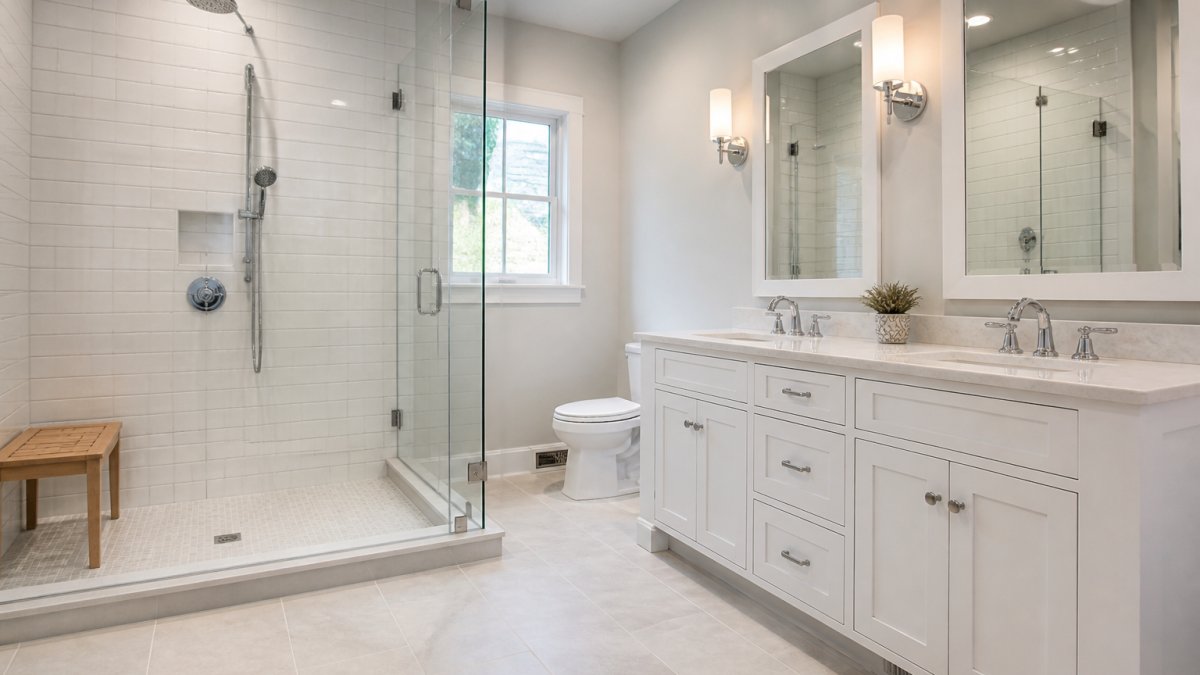
The reality is that bathroom remodel return on investment depends on three factors: what you’re starting with, what buyers in your market expect, and whether you’re fixing problems or adding luxury. A bathroom that’s genuinely broken, outdated plumbing, mold, non-functional layout, needs repairs before cosmetic upgrades make sense. A bathroom that’s simply dated responds well to targeted improvements. And a bathroom that’s already functional benefits most from upgrades that address buyer psychology: cleanliness signals, modern aesthetics, and functional comfort.
At Boston Builders Contracting, we help homeowners prioritize bathroom work based on their goals. The projects that deliver the strongest returns share one thing: they solve real problems that buyers notice immediately when they walk in.
Walk-In Showers vs. Bathtubs for Resale Value
The walk-in shower versus bathtub decision shapes bathroom value more than almost any other single choice. This matters because buyer preference has shifted decisively over the past decade, and it varies by market and buyer demographic.
Walk-in showers now dominate buyer preference in most markets. They signal modernity, accessibility, and low maintenance. A spa-like shower with a rainfall showerhead and body jets appeals to buyers imagining daily comfort. The shower upgrade typically costs less than a full tub replacement and delivers strong perceived value.
However, the math changes based on your home price and local market. In higher-end homes, buyers expect both: a luxurious soaking tub AND a separate walk-in shower. In mid-range homes, a single high-quality walk-in shower often outperforms a bath-shower combination because it feels more contemporary and requires less maintenance. In modest homes, keeping a functional bathtub (especially if you have young children in the neighborhood) still matters for family appeal.
The practical rule: if your bathroom has an old, worn tub-shower combo, replacing it with a modern walk-in shower is almost always the right move. If you’re adding a second bathroom or have the budget for both, the soaking tub becomes a luxury upgrade that appeals to a specific buyer segment, usually older buyers or those without young children.
Bathroom Remodel Return on Investment: What Actually Pays Back
Bathroom renovation cost versus value depends entirely on scope, and the relationship is not linear. A small update, new fixtures, fresh grout, updated lighting, costs less and typically returns a higher percentage of its cost.
A useful way to think about it is cost-per-noticed-improvement. Buyers walk in and form an impression in seconds. Upgrades that change that first impression for the least money tend to return the most.
Here is how the major categories typically sort out:
Fixtures and hardware. Replacing corroded faucets, shower valves, and handles with modern chrome or brushed nickel finishes is one of the cheapest ways to shift perception. A homeowner can often refresh a full bathroom’s fixtures for a few hundred dollars, and the change reads immediately as “well-maintained.” This is the highest-leverage cosmetic spend in most bathrooms.
Tile and flooring. Dated tile surrounds, cracked grout, and worn flooring make a bathroom feel old even when everything works. Regrouting and recaulking are inexpensive; retiling a shower surround is a mid-tier expense; replacing the floor is larger.
Lighting. Most older bathrooms rely on a single overhead fixture. Layered lighting, vanity task lighting plus ambient, costs relatively little and dramatically improves how the room photographs and feels. Because listing photos drive showings, lighting upgrades often punch above their cost.
Storage and organization. Buyers evaluate whether their belongings will fit. Updated cabinetry, shelving, and drawer organization solve a real pain point. Cost scales with whether you reface existing cabinets (lower) or replace them (higher).
Layout and functionality. Fixing a genuinely bad layout, too small, poor traffic flow, no counter space, removes an objection, but it is also the most expensive category because it involves plumbing, electrical, and sometimes structural work. Only pursue this when the layout is actually costing you buyers.
Rank upgrades by cost-per-noticed-improvement, not by how much they cost. Cheap changes that buyers see instantly usually outperform expensive changes they cannot see.
Modest updates often return a higher percentage of cost than full remodels, but they fix fewer problems. If your bathroom is functional and merely dated, a targeted update is usually the better financial move. If it has real defects, no amount of cosmetic spend will compensate, which is why the next section matters.
Bathroom Renovation Cost vs. Value: Budget Tiers and Expected Returns
The relationship between bathroom renovation cost and resale value isn’t linear. Modest updates often return a higher percentage of cost than full remodels, but they address fewer problems.
Small updates ($2,000-$5,000): New fixtures, fresh tile, updated lighting, new hardware. These typically address surface-level concerns and signal maintenance. Buyers feel the difference immediately. Return on investment tends to be strong relative to cost because you’re solving perception problems, not structural ones.
Midrange renovation ($8,000-$20,000): This tier includes walk-in shower installation, new cabinetry, updated flooring, and comprehensive fixture replacement. You’re addressing both aesthetics and functionality. This is where most bathroom remodels land, and it’s where you solve real problems, aging surfaces, poor layout, outdated materials, while keeping costs manageable.
Upscale renovation ($25,000+): This includes high-end materials, spa-like features, heated flooring, luxury fixtures, and potentially layout changes. These renovations appeal to a specific buyer segment and work best in higher-priced homes where buyers expect premium finishes.
The key insight: the bathroom renovation cost that makes sense depends on your home’s price point and local market expectations. A $30,000 bathroom remodel makes sense in a $600,000 home. It doesn’t in a $250,000 home.
Prioritizing Bathroom Upgrades Before Selling
If you’re selling soon and wondering what adds the most value to a bathroom, prioritize ruthlessly. Not all upgrades deserve equal investment. Start by asking: what problems do buyers notice immediately?
First priority: fix visible damage. Mold, water stains, cracked tile, corroded fixtures, and broken hardware signal poor maintenance. Buyers assume worse problems hide beneath the surface. Fixing these costs less than upgrades and removes deal-killing objections.
Second priority: modernize surfaces. Dated tile, worn grout, old flooring, and outdated cabinetry make a bathroom feel old. Fresh surfaces feel clean and well-maintained. This tier includes new fixtures, updated lighting, and fresh paint. These upgrades cost moderately and shift buyer perception significantly.
Third priority: add comfort and convenience. Walk-in showers, heated flooring, additional storage, and improved lighting appeal to buyers but aren’t deal-breakers if missing. Invest here only after addressing tiers one and two.
Skip luxury add-ons if selling soon. High-end spa features, premium tile, and designer fixtures appeal to a narrow buyer segment and rarely return their full cost at resale. Unless your home’s price point justifies them, they’re investments in your own enjoyment, not resale value.
Repairs vs. Cosmetic Updates: What Buyers Actually Notice
Most guides treat repairs and cosmetic updates as one bucket of “bathroom improvements.” They are not, and the difference changes how you should spend. Repairs fix problems. Cosmetic updates improve appearance.
What counts as a repair. A leaking faucet or supply line. A running toilet. Cracked or missing tile that lets water behind the wall. Water-stained drywall or a soft spot near the tub. Failed caulk at the tub or shower base.
What counts as cosmetic. New fixtures on a working system. Fresh grout and caulk. Updated lighting. New paint. A modern mirror or vanity. Refaced cabinetry. New tile over a sound substrate. These change how the room looks and feels without fixing anything that was broken.
Why buyers react differently. A repair signals that the home was not maintained, which raises the question of what else was ignored. Buyers discount aggressively for that uncertainty, often more than the repair itself would cost.
The sequencing rule. Fix repairs first, then spend on cosmetics. A bathroom with older fixtures but no water damage will generally outsell a bathroom with new fixtures and an active leak.
Do not cover a repair with a cosmetic fix. Painting over a water stain, caulking over a failed joint, or tiling over a soft substrate hides the symptom and leaves the cause. An inspector will flag it, and the buyer will renegotiate.
A practical decision framework. Before any cosmetic spend, walk the bathroom and answer four questions:
- Is there any active or past water intrusion, stains, soft drywall, musty smell, loose tile? If yes, stop and fix it.
- Does everything function, toilet, faucets, drains, fan, outlets? If not, repair or replace.
- Is ventilation adequate to dry the room after a shower? If not, address it; moisture is the root of most bathroom deterioration.
- Only after 1-3 are resolved, ask what looks dated and spend there.
This framework is the part most bathroom-value articles skip. They jump straight to finishes because finishes are photogenic.
Repairs do not add value so much as their absence removes it. Treat them as the floor you must clear before any cosmetic upgrade can pay off.
Energy Efficiency and Accessibility: Long-Term Value Drivers
Two upgrades deserve special attention because they’re becoming buyer expectations rather than nice-to-haves: energy efficiency and accessibility.
Energy-efficient fixtures, low-flow faucets, efficient ventilation, and LED lighting, reduce utility costs and appeal to environmentally conscious buyers. They’re increasingly standard in new construction, so their absence in older homes becomes more noticeable. The cost is modest and the appeal is broad.
Accessibility improvements address a real demographic shift. As buyers age, bathrooms that accommodate mobility challenges become increasingly valuable. Walk-in showers (easier than tubs), grab bars, accessible sinks, and adequate lighting appeal not just to older buyers but to anyone who values safety and functionality. These upgrades also future-proof a home, which appeals to buyers thinking long-term.
Heated flooring sits at the intersection of both: it’s energy-efficient (reducing overall heating needs), it’s accessible (safer than cold tile), and it’s increasingly expected in mid-range and higher bathrooms. The cost has come down significantly, and buyer appeal is strong.
Conclusion
The bathroom upgrades that add the most value depend on your starting point and market expectations, but the pattern is consistent: solve real problems first, then modernize appearance. At Boston Builders Contracting, we recommend starting with repairs and surface updates, fixtures, tile, lighting, and grout, because they deliver strong returns relative to cost and remove buyer objections immediately. Walk-in showers, updated cabinetry, and improved storage address both function and aesthetics. Only after these priorities should you consider luxury upgrades. The most valuable bathroom isn’t the most expensive one, it’s the one that feels clean, modern, functional, and well-maintained. Contact us to discuss which upgrades make sense for your home and budget.
Frequently Asked Questions
Which bathroom upgrades add the most resale value?
Walk-in showers, updated fixtures, and modern tile work consistently rank highest for resale appeal. Fresh grout, contemporary lighting, and improved storage also attract buyers. Prioritize these over purely cosmetic changes like paint color. The best value comes from upgrades that address both aesthetics and functionality, signaling to buyers that the bathroom has been well-maintained and is move-in ready.
What’s the bathroom remodel return on investment?
A midrange bathroom renovation typically returns 50-60% of its cost at resale, while upscale remodels may return 60-75%. The return depends heavily on your local market, the condition of your current bathroom, and whether you’re addressing functional issues or purely updating aesthetics. Repairs to plumbing, electrical, or structural problems should be prioritized before cosmetic upgrades, as these directly impact buyer confidence and home inspection outcomes.
Is $10,000 enough for a bathroom remodel?
Yes, $10,000 can fund meaningful improvements if prioritized correctly. Focus on high-impact, visible changes: updated fixtures, new tile work, fresh grout, modern lighting, and improved storage. Avoid structural changes or full layout overhauls at this budget level. Consult with a contractor to assess whether your bathroom needs repairs first, fixing water damage, mold, or plumbing issues takes priority over cosmetic upgrades and protects your investment.
Should I add a walk-in shower if I’m planning to sell?
A walk-in shower upgrade typically adds significant buyer appeal, especially in primary bathrooms. Modern showers with rainfall showerheads and spa-like finishes attract today’s buyers more than traditional tubs alone. However, consider your local market and buyer demographics. If your home attracts families with young children, retaining at least one soaking tub may be important. The best approach balances current buyer preferences with the functionality your market demands.

